Home / Resources / Travel Management

How Southeast Asia's C-Suite Really Travel
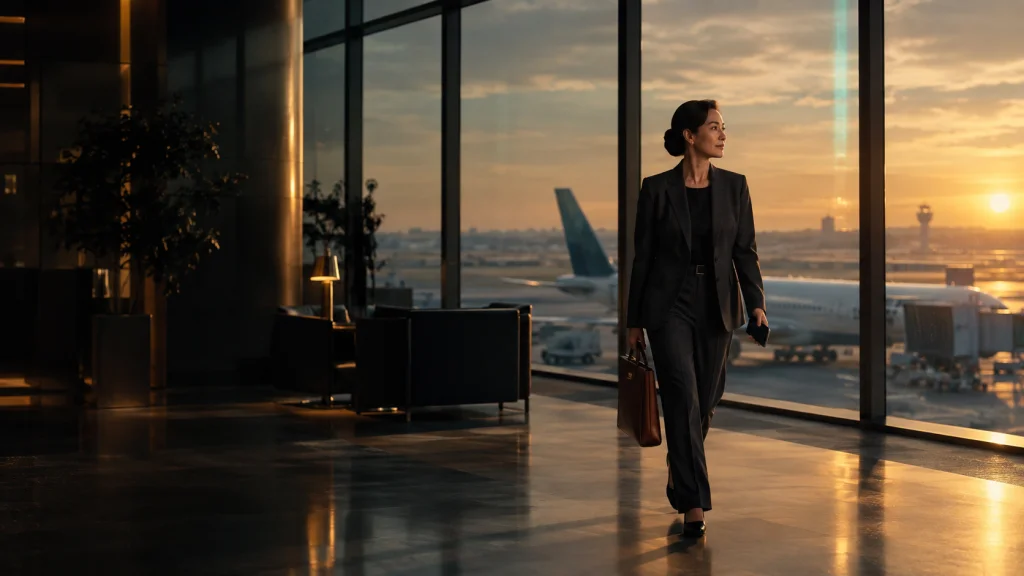
Home / Resources / Travel Management
Forget the champagne and the lie-flat bed. The region's most senior executives travel less for glamour than for time, and the numbers suggest they are quietly rewriting the rules.
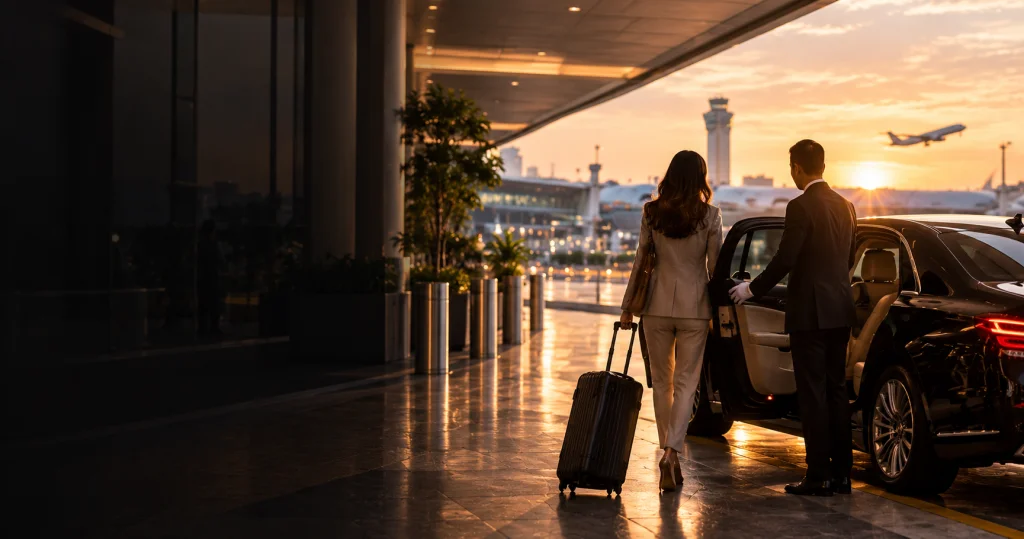
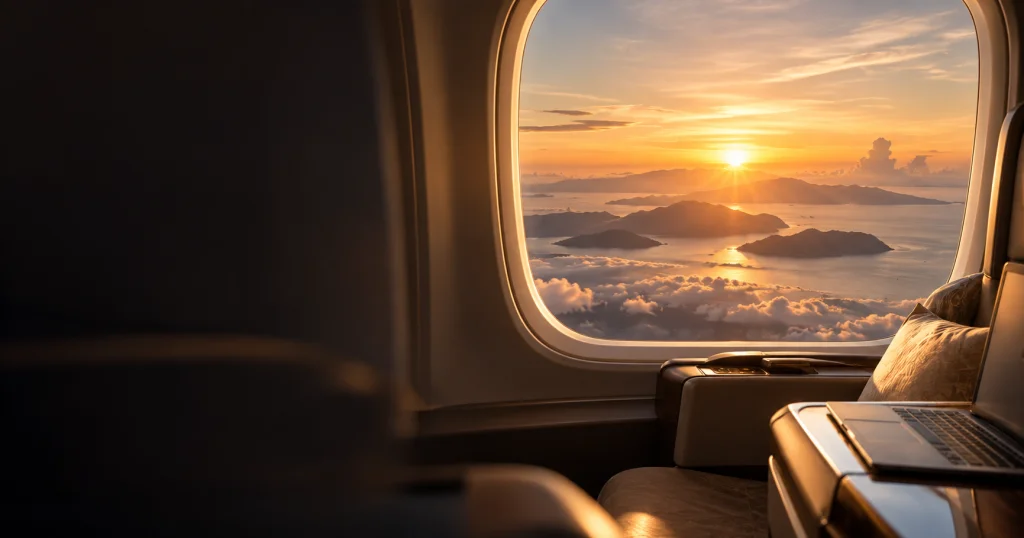
There is a popular picture of the travelling chief executive. It involves a chauffeured saloon, a first-class cabin and, somewhere over the Andaman Sea, a glass of something vintage. It is a charming picture. It is also, for the most part, wrong.
The truth is rather less cinematic and a great deal more interesting. Southeast Asia's senior executives travel the way a good general moves troops: sparingly, precisely and with an almost obsessive regard for time. Luxury, where it appears, is rarely indulgence. It is logistics wearing a better suit.
The backdrop is one of remarkable appetite. The Global Business Travel Association expects business travel spending across Asia Pacific to reach US$700.9 billion in 2026, up 10.9 per cent on the year and accounting for more than 40 per cent of the global total. Indonesia is forecast to grow by 12.6 per cent, comfortably ahead of Singapore's 9 per cent.
The corridors tell the same story. According to OAG, Kuala Lumpur–Singapore was the world's third-busiest international route in 2025, with 5.6 million seats; Jakarta–Singapore ranked sixth, with 4.6 million. Changi, meanwhile, handled close to 70 million passengers last year, a record, and added 13 new city links.
In short, the region's boardrooms are on the move. How they move is where matters grow interesting.
The defining habit of the Southeast Asian C-suite is the short hop. A Jakarta finance director may fly to Singapore for a single lunch with investors and be home before supper. The flight between Kuala Lumpur and Singapore lasts barely an hour, shorter than many a London commute, and it is treated accordingly.
This rewards a particular kind of discipline. The first departure of the morning. A seat near the front, not for the champagne but to be first off the aircraft. Hand luggage only. A car waiting, never summoned. Each ten minutes saved is, over a year, a week of working life returned.
It follows that the most prized perk is not the cabin but the connection. GBTA's polling found that 39 per cent of travel programmes reported a rise in multi-destination trips in 2025, up from 21 per cent a year earlier. Singapore, Jakarta, Ho Chi Minh City, back to Singapore: the modern itinerary is less a journey than a circuit.
When senior executives do spend, they spend on minutes. Lounge access is valued less for its canapés than for its quiet and its Wi-Fi. Fast-track immigration, a hotel near the meeting rather than the most celebrated hotel in town, a flexible fare that can be changed at 11pm without penalty: these are the true status symbols.
Tellingly, GBTA found that 43 per cent of travel managers see employees paying for upgrades out of their own pockets, a figure that rises to 51 per cent in Asia Pacific and North America. Flight upgrades account for 78 per cent of such spending. The inference is plain: when the policy does not buy comfort, people buy it themselves.
Here the picture grows a touch uncomfortable. SAP Concur's latest research found that 60 per cent of business travellers in Asia Pacific admit to bending travel and expense rules, against a global average of 50 per cent. Executives are rather more inclined to do so than their juniors: 54 per cent against 49 per cent.
Yet it would be unkind to read this as greed. The same study found that 37 per cent of employees in the region decline to claim legitimate expenses at all, for fear of scrutiny, well above the global 25 per cent. The fault lies not with the traveller. It lies with a policy written for an average trip that no senior executive has ever taken.
Distilled, the habits of the region's most seasoned travellers look something like this:
Fly early, return the same day wherever the diary allows.
Sit forward, travel light. The aircraft door is a queue like any other.
Choose proximity over prestige when booking a hotel.
Pay for flexibility, because plans in this region change by the hour.
Blend with purpose. GBTA found 71 per cent of employees report improved wellbeing where companies embrace blended business and leisure travel: a fair case for the Saturday in Bali after a Friday in Jakarta.
Delegate the logistics entirely. The executive's job is the meeting, not the booking.
There is a lesson here for every finance director who has ever winced at an expense report. SAP Concur found that 43 per cent of CFOs believe more than half their company's travel could be replaced by video calls. Yet 94 per cent of travellers say travel is helpful or essential to their success. Both camps have a point. The answer is not fewer trips but better ones: planned with care, changed without drama and accounted for without suspicion.
That is the quiet art of arriving. It asks for no fanfare. It merely asks that someone, somewhere, has thought of everything first.
At Bliink, that is precisely our job. We manage corporate travel for Southeast Asian businesses with the discretion of a trusted butler, so your leaders can think about the meeting, not the route. Corporate Travel That Understands You.
FAQ
Clear answers, the way your concierge would put them.
Mostly on short, same-day trips between regional hubs such as Singapore, Jakarta and Kuala Lumpur. They prioritise early flights, hand luggage, hotels near the meeting and flexible fares over conspicuous luxury.
Kuala Lumpur–Singapore and Jakarta–Singapore. OAG ranked them the third and sixth busiest international routes in the world in 2025, with 5.6 million and 4.6 million seats respectively.
GBTA forecasts US$700.9 billion in business travel spending for 2026, up 10.9% and more than 40% of global spend. Indonesia is expected to grow 12.6%.
Usually because the policy was written for an average trip, not theirs. SAP Concur found 54% of APAC executives bypass travel and expense rules, often to buy flexibility or time.
Flexible fares for senior staff, clear rules on blended business and leisure travel, hotels chosen by proximity to meetings, and a managed booking partner that handles last-minute changes.